Car Accident in UAE? Fines, Insurance & What to Do Next
You’re driving home. The phone rings. You glance down for one second. When you look up, the car in front has stopped. And you’re going too fast to stop in time.
Thud.
Heart racing. Hands shaking. What now?
If you’ve ever been in an accident in the UAE or worried about it, you know that feeling. Panic. Confusion. No idea what to do first. Then come the questions: Will I get fined? What about insurance? How does this affect my record?
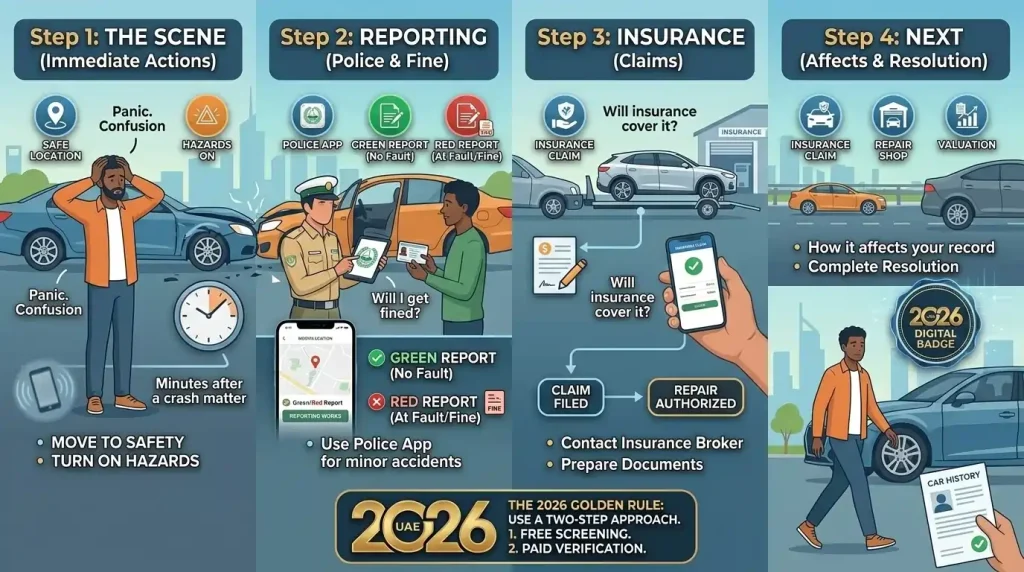
This guide answers all of it. Not vague advice. Just real steps: what to do at the scene, how reporting works, whether fines hit your license, and exactly how insurance claims play out.
Because the minutes after a crash matter. And knowing what comes next? That’s what turns panic into control. Let’s walk through it together.
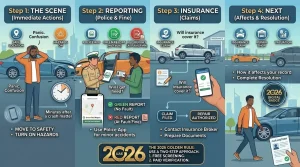
First Things First: What to Do at the Accident Scene
Your heart’s pounding. That’s normal. But what you do next matters.
Step 1: Stop and check
Pull over safely. Anyone hurt? Call 998 for an ambulance immediately.
Step 2: Call the police
UAE law requires reporting within 24 hours. Do it now.
- 999 for emergencies
- 901 for minor accidents
Step 3: Take photos
Before moving anything, shoot everything. Damage. Plates. The scene. Skid marks. These protect you later.
Step 4: Exchange information
Get their name, number, plate, and insurance details. Stay calm. Stay polite.
Step 5: Find witnesses
Look around. Someone saw what happened. Get their contact information.
Step 6: Don’t admit fault
Even if you think it’s your fault, don’t say it. Let the police decide. And never accept cash settlements, illegal for anything beyond tiny scrapes, or you lose insurance coverage.
Step 7: Wait for the police
Stay put. Get that police report number. You’ll need it for everything that follows.
Breathe. The hard part’s almost over.
Reporting to Police: The 24-Hour Rule
You’ve left the scene. Maybe you’re home now or sitting somewhere quiet. Adrenaline is wearing off. Exhaustion is setting in. Don’t rest yet. One more thing: the police report.
The clock is ticking.
In the UAE, you have 24 hours to report any accident. Miss that window, and things get messy. Insurance claims get rejected. Fines may follow. Legal trouble, too. So do it now, while it’s fresh.
How to report, by emirate
- Dubai: Use the Dubai Police app or call 901. Both work fine.
- Abu Dhabi: Use the Abu Dhabi Police app or call 999 for emergencies.
- Northern Emirates: Visit the nearest police station. Bring your documents.
What you’ll get
A police report number. That’s gold. Write it down. Save it in your phone. Take a photo. You’ll need it for:
- Insurance claim
- Checking if fines were issued
- Future disputes
- Selling the car someday
What if the accident was minor?
Some people think small bumps don’t need to be reported. Wrong. In the UAE, even minor accidents should be reported if there’s any damage. The only exception? Trivial scratches where both parties agree to walk away. But that’s rare and risky.
Pro tip
If you used an app, take a screenshot of the confirmation. If you visited a station, keep the physical copy. Paper trails solve problems. One phone call or visit now saves weeks of headaches later.
Will You Get Fines After an Accident?
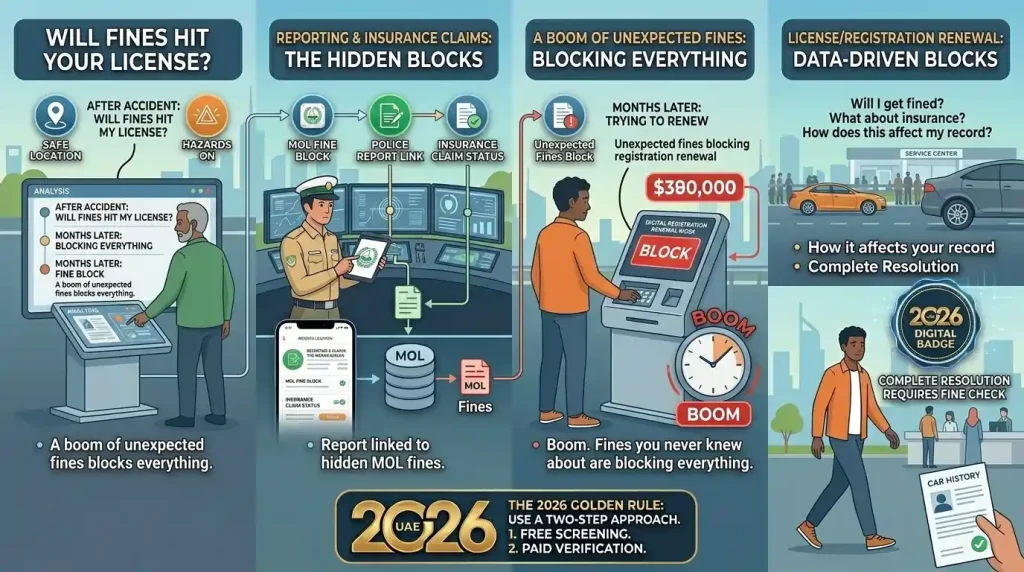
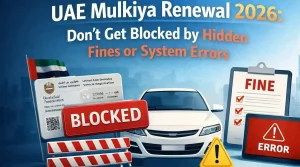
This is the question everyone forgets to ask until it’s too late. You walk away from the accident thinking it’s over. Then months later, you try to renew your registration or license. And boom. Fines you never knew about are blocking everything.
Let’s break down how it actually works.
Scenario A: You caused the accident
If the police decide you were at fault, fines are likely. Common ones include.
- Reckless driving
- Sudden swerve
- Not keeping a safe distance
- Running a red light
These show up in the EVG system linked to your license or vehicle. Black points may also apply. Too many and your license gets suspended. You must pay these fines before you can renew anything. They don’t expire. They don’t disappear.
Scenario B: The other driver caused it
Good news. You shouldn’t receive any fines. But here’s the catch: sometimes the system flags both cars temporarily. It happens.
Don’t panic. Wait 48 to 72 hours after the police report. Then check EVG. If fines appear on your record wrongly, you can dispute them with proof.
Scenario C: Fault isn’t clear yet
Some accidents need investigation. Maybe both drivers blame each other. Maybe cameras need reviewing.
During this time, no fines are issued. Once police complete their investigation, fault is assigned and fines follow.
How to check what you owe
Simple. Use EVG or MOI with:
- Your plate number
- Or the accident file number
Do this a few days after the accident. Then again, before any renewal. Fines sometimes take time to appear.
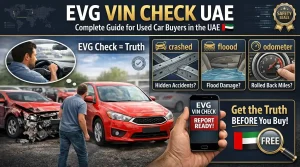
Before you buy a used car, always check for unpaid fines, which can become your responsibility after purchase.
One last thing
Don’t assume you’re fine just because no one mentioned fines at the scene. Check. Always check. A minute on EVG now saves a nasty surprise later.
Insurance Claims: Step-by-Step
Okay. The police report is done. You know if fines are coming. Now comes the part that confuses most people: insurance.
Deep breath. It’s not as complicated as it seems.
Step 1: Call your insurance company
Do this within the timeframe your policy specifies. Usually 3 to 7 days. Miss it, and they can reject your claim entirely.
Have these ready when you call
- Police report number
- Photos of the damage
- Other driver’s details (name, plate, insurance)
They’ll open a claim file. Write that number down too.
Step 2: Choose your repair garage
This depends on your policy.
- Comprehensive coverage? You can usually choose any garage. Some insurers have approved lists; check first.
- Third-party only? If the other driver was at fault, their insurance pays. You’ll deal with them, not your own company.
- Agency repair? Some policies cover repairs at the official dealership. Others send you to regular garages. Know which you have.
Step 3: Assessment time
An insurance assessor inspects your car. They decide:
- What damage is covered
- How much should repairs cost
- Whether the car is repairable or a total loss
This takes a few days, usually. Be patient.
Step 4: Approval and repairs
Once approved, the garage gets to work. You pay your excess (deductible) directly to them. The insurance company pays the rest.
Step 5: Collect your car
Repairs done. You pick it up. Inspect everything before driving away. Make sure work matches what was approved.
How long does all this take?
- Minor repairs: 3 to 7 days
- Major damage: 2 to 4 weeks
- Parts needing import: Could be longer
One more thing
Keep every document. Police report. Claim number. Assessor report. Repair receipts. Paperwork is boring until you need it. Then it’s everything.
What About a Rental Car While Yours Is in the Shop?
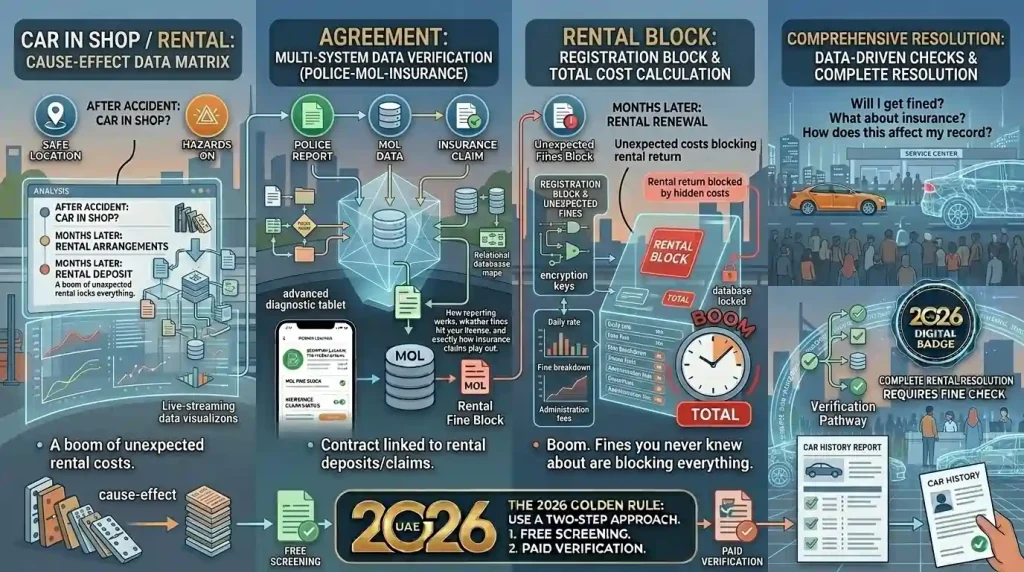
This is the question everyone forgets to ask until they’re standing at the repair shop with no ride home.
Does insurance cover a rental?
Check your policy. Seriously, pull it out right now if you can. Some comprehensive policies include “courtesy car” or “hire car” coverage. Others don’t.
If you have it: The insurance company usually gives you a car for a set number of days. Often 7 to 30 days, depending on your policy. Sometimes it’s a basic sedan. Don’t expect a luxury upgrade.
If you don’t have it: you’re paying out of pocket. Rental companies near repair shops know you’re desperate. Shop around. Compare rates. Don’t just take the first one.
How to get one
If insurance covers it: They’ll usually arrange it or give you a list of approved rental companies. Use those. If you go elsewhere, they might not reimburse you.
If you’re paying yourself: Book by the week, not the day. Cheaper. And ask about long-term rates if repairs will take a while.
What if you can’t afford the upfront cost?
Some rental places want a deposit. Could be 1,000 to 2,000 AED. If that’s tight, ask about payment plans. Some companies offer them. Or ask friends. This is what emergency contacts are for.
One catch
If the accident was the other driver’s fault and their insurance is paying, you might be able to claim your rental costs back. But you’ll need receipts. Lots of receipts. And you may have to fight for it.
What If Your Car Is a Total Loss?
Sometimes repairs cost more than the car’s worth. Insurance calls this a “total loss.”
They calculate the value. Not what you paid. Not what you owe. What it was worth that morning. They check market value, mileage, condition, and service history.
You get a check. That amount minus your excess. Example: Car worth 30,000 AED, excess 1,000 AED. You get 29,000 AED.
If you owe more than it’s worth. Say you owe 35,000 AED, but the car is worth 30,000 AED. Insurance pays 29,000. You still owe the bank 6,000 AED. Gap insurance covers this if you have it. If not, that’s on you.
The car goes to them. They sell it for parts. You don’t keep it unless you buy it back. Usually not worth it.
Can you argue the value? Yes. Gather recent sales listings for similar cars, repair receipts, and service records. Submit everything. Sometimes they adjust. Sometimes they don’t.
Hit and Run: The Other Driver Took Off. Now what?
Someone hits you and drives away. Now you’re sitting there with a damaged car and no one to swap details with.
Step 1: Don’t chase them. You don’t know who they are or what they’ll do. Stay put. Call the police.
Step 2: Call the police immediately. Faster reporting means a better chance of finding the driver. Cameras are everywhere here. Police can pull footage if they know when and where to look.
Step 3: Gather everything. While waiting, note the car’s color, make, and model. Any part of the license plate. Which direction did they go? Exact time and location. Look for witnesses.
Step 4: File the report. Give the police what you have. Get that report number. You’ll need it.
Step 5: Call your insurance. Does your policy cover hit and run? Comprehensive usually does. You pay your excess, and they fix the car. Third-party only? Probably not. Repairs are on you.
If police catch them later, their insurance pays. You might even get your excess back. If not, you live with whatever your policy covers. Not fair, but that’s how it works
Leased or Financed Cars; Extra Rules You Need to Know
What If You’re Still Paying for the Car or Leasing It?
If you have a loan on the car or you’re leasing it, the rules change slightly. You don’t own it outright. The bank or leasing company does. And they have opinions about what happens next.
For financed cars (you have a loan)
The bank is listed on the insurance policy. Usually as a “loss payee.” That means if the car is damaged or totaled, the insurance check goes to them first. Then they take what they’re owed and give you the rest.
If repairs are minor: The bank usually doesn’t get involved. You normally deal with insurance and the repair shop.
If it’s a total loss: The bank gets paid directly. If the payout is less than what you owe, you’re still responsible for the difference. The bank won’t write it off. You’ll need to keep paying or negotiate.
For leased cars: Leasing companies have their own rules. Most require you to use their approved repair shops. If you take it somewhere else, they might reject the work or charge you penalties.
Check your lease agreement. Seriously. Find the section about accidents. It’s boring but it saves fights later.
Can you switch repair shops?
With a loan, usually yes, as long as it’s within insurance rules. With a lease, probably no. Stick to their list.
One more thing
If you’re behind on payments and the car gets damaged, the situation gets complicated fast. The bank or leasing company might accelerate your loan or demand the car back. Talk to them immediately if this is your situation. Hiding doesn’t help.
Tourists: You’re Driving a Rental. What’s Different?
Maybe you’re on holiday. Maybe you’re visiting family. Either way, you’re driving a rental car and something happened. The rules aren’t the same as for residents.
Reporting is the same
Still call the police. Still get that report number. Still do it within 24 hours. That part doesn’t change.
Insurance is different
Rental companies include basic insurance in the price. But basic usually means high excess. Sometimes 2,000 to 5,000 AED. And it might not cover everything.
When you rented the car, they probably offered you extra coverage. Collision Damage Waiver. Theft Protection. If you said no, you’re now exposed.
What you pay
If you have the basic insurance, you pay:
- The excess (maybe thousands of dirhams)
- Plus any damage beyond what the insurance covers
- Plus “loss of use” fees while the car is being repaired (rental companies charge for this)
If you bought full coverage, you pay nothing or very little. That’s why they push it at the counter.
Can you use your own insurance?
Some credit cards include rental car insurance if you pay for the rental with that card. Check your card benefits. Some do. Some don’t. Some require you to decline the rental company’s coverage first.
What about travel insurance?
Check the policy. Some travel insurance plans cover rental car accidents. Some don’t. Some cover only the excess, not the full damage.
The rental company will come after you. They have your credit card on file. They’ll charge it. If the damage is big and your coverage is small, dispute it through your credit card company. But you’ll need documentation. Lots of it.
One tip
Before you drive any rental car in the UAE, take a video. Walk around the car. Show existing scratches and dents. Upload it somewhere with a timestamp. This protects you from being charged for damage you didn’t cause.
How Much Will You Pay?
Let’s talk money. Because after an accident, everyone wants to know the same thing: what’s this going to cost me?
The answer depends on one word: excess.
What is excess?
Simple. It’s the amount you agree to pay toward repairs before your insurance covers the rest. Say repairs cost 5,000 AED. Your excess is 1,000 AED. You pay that thousand. Insurance pays the remaining 4,000.
How much is excess usually?
In the UAE, it varies:
- Basic policies: 1,500 to 2,500 AED
- Comprehensive policies: 500 to 1,500 AED
- Luxury cars: Often higher
- Young or new drivers: Sometimes higher
Check your policy document. Don’t guess.
Who pays what? A quick breakdown
| Scenario | What You Pay |
| You caused it; have a comprehensive | Excess amount only |
| You caused it, third-party only | Full cost of the other car + your own repairs |
| The other driver is at fault, and they’re insured | Zero (their insurance pays everything) |
| The other driver is at fault and had no insurance | Complicated. May need legal help. |
| Hit and run | Depends on your policy. Some cover, some don’t. |
What if repairs cost less than your excess?
Let’s say your excess is 2,000 AED. Repairs are 1,500 AED. You pay the full 1,500. Insurance pays nothing. That’s how excess works; it’s your share up to that amount.
Hidden costs to watch for
- Towing fees: Some policies include free towing. Some don’t.
- Rental car while yours is repaired: Not automatically included. Check if you have this.
- Premium increase next year: If you caused the accident, your renewal price will likely go up. Sometimes 20 to 50 percent.
The smart move
Know your excess before you need it. Open your policy right now. Take a photo of that page. Future you will be grateful. Because when you’re standing at the repair shop, stressed and tired, the last thing you want is a surprise bill.
How Accident History Affects Future Car Sales

That crash you had? It stays with the car, not you.
If you’re selling
A reported accident drops value. Minor ones? 5 to 10 percent off. Major crashes? 20 to 30 percent. Frame damage? Honestly, good luck.
Be upfront. Show repair receipts. Hiding it never ends well; buyers check EVG.
If you’re buying
Found an accident? Don’t run yet. Ask how bad. Ask where it was repaired. Ask for photos.
Then negotiate. That accident is leverage.
Minor bump? Ask for 5 percent off. Major repair? Ask for 10 to 15 percent. Frame damage? Walk. No car is worth that risk.
What doesn’t show
Private settlements? Invisible. Parking lot scrapes you paid cash for? Never recorded.
So a clean EVG isn’t perfect. But a dirty EVG tells you something happened. Your job is to find out exactly what.
How to Check Accident History on EVG
You’ve heard me mention EVG a few times now. Let me show you exactly how to use it.
It takes two minutes. Maybe less.
Step 1: Go to evg.ae
Make sure it’s the official site. Look for the government domain. Third-party sites exist, but stick with the real one.
Step 2: Find “Traffic Accidents Management.”
It’s usually on the homepage. Can’t spot it? Look for anything about vehicle history or accident checks.
Step 3: Enter the VIN
That’s the 17-digit chassis number. Type carefully. One wrong letter and you’re checking the wrong car. Double-check it. Then check again.
Step 4: Click search
Wait a few seconds. The system pulls data from multiple emirates.
Step 5: Read the results.
Either you’ll see:
- Accident details (date, location, report number)
- Or a message saying no accidents found
If you’re buying a used car, don’t stop here. Always run a complete VIN check to verify the vehicle’s full history before purchasing.
Both tell you something useful.
Step 6: Screenshot everything
Take a photo. Save it. This is your proof.
The Dubai catch
Remember: EVG has limited data for Dubai cars. If you’re checking a Dubai plate and see nothing, don’t celebrate yet. Use RTA instead. Costs 120 AED but shows the real story.
How often should you check?
- After an accident: Wait 48 to 72 hours, then confirm fines or history
- Before buying a used car: Always. Nonnegotiable.
- Before renewal: Smart move to avoid surprises
That’s it. Two minutes. Free. Could save you thousands.
What If the Accident Wasn’t Your Fault, but Fines Appear?
This happens. And yes, it’s annoying. You did nothing wrong. The police report proves it. Yet months later, fines show up under your name.
Why?
- System errors
- Temporary flags never cleared
- Wrong plate number entered
What to do:
Don’t pay yet
Gather your evidence: police report, report number, Emirates ID, and a screenshot of the incorrect fines. Visit the police station that handled your accident. Not any station, that specific one.
Explain calmly. Show your papers. Request removal. Get confirmation. Check EVG again after a few days. The system won’t fix itself. Those fines will sit there blocking license renewals, registration, and maybe even your visa.
Always check your driving license status after an accident to ensure no unexpected black points or suspensions.
A little follow-up now saves big headaches later.
If fines still show after visiting the police station, contact EVG customer support for help clearing your record.
Accident Timeline: What to Expect
Everyone wants to know: how long will this take? Truth is, it depends. But here’s a realistic breakdown so nothing catches you off guard.
Day 1: The accident
You stop. You check. You call the police. You take photos. You exchange information. You wait for officers.
This part takes a few hours. Feels like forever. But it ends.
Day 1-2: Police report
The report is filed. You get a report number. That number is now your best friend. Keep it safe.
Day 2-3: Insurance notified
You call your insurer. They open a claim. They give you another number. Now you have two numbers to track.
Day 3-7: Assessment
An insurance assessor looks at your car. They decide what’s covered. They approve repairs or declare it a total loss.
This waiting is the hardest part. You’re without a car. Life is inconvenient. It’s normal to feel frustrated.
Weeks 2-4: Repairs
The garage fixes your car. Parts may need ordering. Some come fast. Some don’t. Ask for updates regularly.
Week 4+: Fines appear
If you were at fault, fines show up in EVG now. Check around this time. Don’t let them surprise you later.
Once all fines are cleared, don’t forget to renew your vehicle registration on time to avoid additional penalties.
Ongoing: History stays
The accident stays on EVG forever. Anyone checking that car’s VIN years from now will see it.
Quick summary
| Timeline | What Happens |
| Day 1 | Accident. Police report filed. |
| Day 1-2 | Report number received. |
| Day 2-3 | An insurance claim was opened. |
| Day 3-7 | The assessor inspects. Approval given. |
| Week 2-4 | Repairs completed. |
| Week 4+ | Fines appear if at fault. |
| Forever | Accident stays on EVG. |
One last thought
Some steps take longer. Parts get delayed. Insurance companies get busy. Assessors have backlogs. Patience is annoying advice when you’re stressed. But it’s also true. This too will pass. And when your car is back, you’ll forget how long it took.
Conclusion
No one plans to have an accident. You don’t wake up thinking “today might be the day.” It just happens. Fast. Confusing. Scary.
But here’s what we want you to take away from this guide:
You can handle this.
Not because accidents are easy. They’re not. But because you now know what comes next.
Report quickly. Document everything. Check your fines. Deal with insurance. And when it’s all over, check EVG one more time to make sure nothing’s waiting to surprise you.
If you’re buying a used car someday, you’ll also know what to look for. That accident history on EVG? Now you understand it. Now you can negotiate from a position of strength rather than fear.
FAQs About UAE Accidents
Can I settle an accident without the police?
Technically, yes, for tiny scratches where both agree. But risky. No police report means no insurance coverage. If the other driver changes their mind later, you’re unprotected. Not worth it.
How long do I have to report to insurance?
Check your policy. Usually 3 to 7 days. Miss it, and they can reject your claim completely. Don’t delay.
Will my insurance premium increase?
Did you cause the accident? Almost certainly. Expect 20 to 50 percent higher at renewal. If the other driver was at fault, your price usually stays the same.
Can I check accident history for free?
Yes. EVG and MOI are free for basic checks. Dubai cars need an RTA that’s 120 AED, but it’s worth it.
Do rental cars show accident history?
Same as any car. If police were called, it’s on record. Check before renting or buying ex-rental.
What if the other driver has no insurance?
Report to the police immediately. It’s illegal to drive uninsured. You may need legal action. Some policies cover this; check yours.