Dubai Police AI Traffic System 2026: The Complete EVG Sync & Dispute Guide
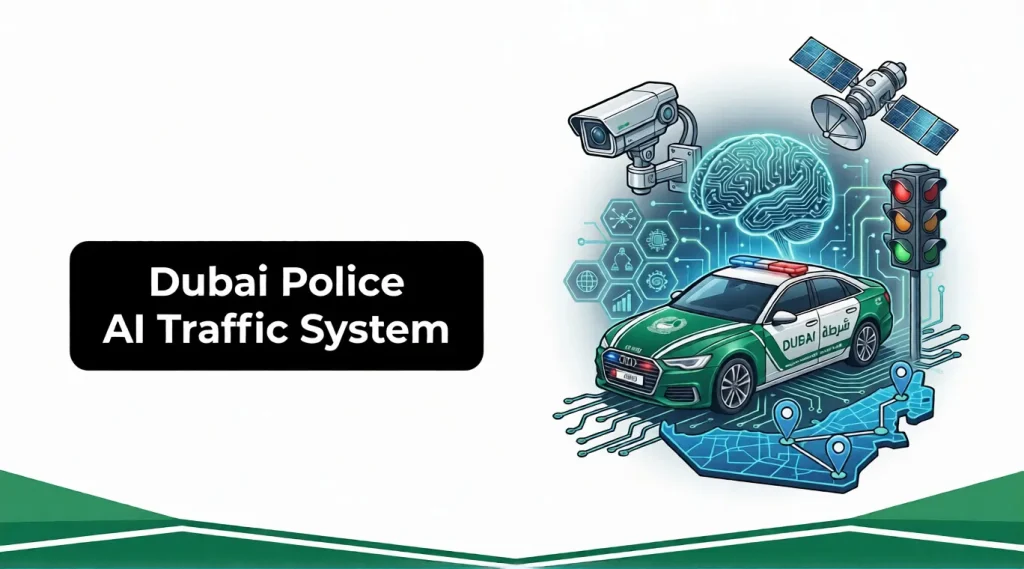
Navigating the roads in Dubai has entered a brand new era. If you have been on the road lately, you might have noticed fewer patrol cars, but more cameras. This is not a coincidence. The Dubai Police AI traffic system is now fully active and much smarter than the old radars we used.
Many drivers think they can spot a camera because of the bright flash. In 2026, that is no longer true. This guide will walk you through the new technology, why your fines might be “hidden” for a few days, and how you can protect your driving record using the latest dispute tools.
Beyond the Hype: The Real Shift in 2026 Traffic Enforcement
You probably heard the news when the system “just went live” on major commutes like Sheikh Zayed Road. The headlines were full of talk about “robocops” and instant fines. But the real shift is happening behind the scenes, in the hardware itself.
The “Flashless Radar” Myth-Busting
The biggest surprise for drivers in 2026 is the lack of a camera flash. In the past, if you were speeding or using a phone, a bright light would tell you that you were caught. Today, the new AI units use Infrared (IR) and multispectral imaging.
These cameras can see perfectly in total darkness, through heavy rain, and even through 100% window tint. They do not need a flash to get a crystal-clear image of your seatbelt or your phone’s screen. If you are waiting for a flash to know if you got a fine, you are looking for something that no longer exists.
The Verification Window: Why Fines Take 48 Hours to Sync
Wondering why that speeding incident didn’t turn into a fine? You’re not alone, it’s the top question in 2026.” This is where the Human-in-the-Loop gap comes in.
Table 1: The Processing Pipeline: From Camera to Fine
Understanding how the technology works helps drivers realize that there is a structured process behind every notification. The following table explains each stage of the digital enforcement loop.
| Stage | What Happens |
| Detection | Cameras in high-risk zones feed video into computer vision models |
| Identification | System spots unbuckled driver, raised phone, or closed bumper |
| Evidence capture | Timestamp, plate, video clips, and location are assembled |
| Human review | Back-office team verifies the violation meets legal standards |
| Notification | Fine arrives with time, place, and recorded behaviour attached |
| Dispute | Standard appeal routes through official channels remain available |
Why Fines Don’t Appear Instantly
Drivers often feel confused when a known violation does not appear in their digital traffic file immediately after the event. A built-in feature of the 2026 enforcement protocol, this delay is designed to make sure every AI-generated flag is accurate and fair before it becomes a legal penalty.
- Human Verification Step: All system-generated alerts are reviewed by a trained officer to ensure the violation is valid.
- Data Processing Window: The system requires a standard 24–48-hour period to bundle the video evidence and the timestamp with your vehicle file.
- Quality Control Check: This stage prevents false positives by filtering out errors in which the AI misinterprets shadows or common hand gestures.
- System Latency Factor: The high number of video feeds flowing from city cameras to the main server means they naturally have to wait in line for final processing.
The Sync Order: Where to Check First
Knowing which portal to refresh can save you a lot of time and unnecessary stress while you wait for a pending fine to be cleared. In 2026, traffic data flows through a specific hierarchy of digital platforms, starting at the local level and moving to federal portals.
- Dubai Police Smart App: This is almost always the very first platform to display a fine once the human officer approves the AI evidence.
- Official RTA Website: The RTA portal tends to update a little slower than the police app. If you got a fine recently, give it a few hours to appear on their site.
- Ministry of Interior Portal: As a federal-level platform, the MOI site takes a bit longer to pull data from the specific Dubai Police servers.
- Emirates Vehicle Gate: Because EVG is a comprehensive national hub, it can take 24 to 72 hours for a Dubai-specific fine to fully appear
The Five Behaviors It’s Hunting (And the 2026 False Positives)
The AI is programmed to look for five specific habits that cause the most accidents in the UAE. However, being “smart” doesn’t mean it is perfect.
Table 2: The Core Violations: What the AI is Searching For
The system is programmed to identify specific risks that lead to road congestion and safety hazards. Below is the primary breakdown of the behaviors currently under automatic watch.
| Violation | Risk It Creates |
| Not wearing a seatbelt | Fatal injury risk in collisions |
| Using a phone while driving | Drifting, phantom braking, delayed reaction |
| Blocking traffic flow | Bottlenecks, ripple congestion |
| Stopping in a live lane | Blocks emergency vehicles, forces dangerous swerves |
| Tailgating | Rear-end crashes, lane closures during peak hours |
Seatbelt Skipping & “Occlusion Errors”
The AI looks for the diagonal line of a seatbelt. A common “False Positive” in 2026 is the Occlusion Error. If you are wearing a black shirt and a black seatbelt, the AI might think you aren’t wearing one. This is one of the top reasons for successful fine disputes this year.
Mobile Phone Use
The system is trained to detect the shape of a smartphone near the ear or in the driver’s hand. In 2026, people successfully challenged fines when they were actually holding a wallet, a chocolate bar, or even just scratching their ear in a way that looked like holding a phone.
Obstructing Traffic & Live Lane Stops
Stopping in a live lane, especially near mall exits like Dubai Mall or MOE, is now a major trigger. The AI monitors how long a car stays stationary in a moving lane. If you are picking up a friend in a “no-stop” zone, the camera will flag you within seconds.
Tailgating and the 2-Second Rule
Instead of guessing, the 2026 AI keeps an eye on the space between your car and the one ahead, measuring it in real time. At its core, it’s got a smart system, basically a digital version of the old 2-second rule that figures out exactly how much distance you should leave based on how fast you’re going. Whenever the road gets slick or visibility is limited, the system gets stricter. To avoid a ticket, you’ll need to hang back even further, since it automatically demands more space.
Regional Fine Disparities: Dubai vs. Abu Dhabi
Crossing the border from Dubai to Abu Dhabi has always been tricky, but in 2026, the AI radars make it even more complex. The rules change the moment you cross the line on the E11.
Table 3: Comparison Table: Speed & AI Rules 2026
The following data highlights the key differences in how autonomous enforcement systems operate across the two primary Emirates.
| Feature | Dubai (RTA/Police) | Abu Dhabi (TAMM/Police) |
| Speed Buffer | 20 km/h (Most roads) | Zero Tolerance (Strict) |
| Radar Trigger | 121 km/h (on a 100 road) | 101 km/h (on a 100 road) |
| AI Phone Detection | Active + 30-day Impound risk | Active + Instant SMS |
| Portal Sync | Syncs to EVG in 48-72 hours | Syncs to EVG in 24-48 hours |
Hessa Street vs. Sheikh Zayed Road: Note that some “Smart Zones” in Dubai, like residential areas or school zones, have now removed the 20 km/h buffer to match Abu Dhabi’s safety standards. Always watch the digital signs.
How to Dispute an AI Fine: The “Human-Led” Evidence Package
If you receive a notification for a fine you didn’t commit, do not panic. In 2026, the Human-Machine Collaboration (HMC) Icons were introduced.
Check the Transparency Label
When you view your fine on the Dubai Police website, look for the icon.
- Machine-Led: The fine was issued automatically (like a simple speed trigger).
- Human-Verified: An officer reviewed the footage and confirmed the behavior.
Steps to Object via Public Prosecution
You no longer need to visit a station.
- Log in to the Dubai Public Prosecution portal using your UAE Pass.
- Select “Objection to a Traffic Violation.”
- Upload your evidence. In 2026, dashcam footage is the “Gold Standard” for winning a dispute. If you have a dashcam that shows you were wearing a seatbelt, the fine is almost always canceled.
Deployment Zones: Where Phase 2 Hits You First
The system is expanding. While Phase 1 covered the main highways, Phase 2 is now moving into your neighborhood.
- Phase 1 (Active): Sheikh Zayed Road, Al Khail Road, and Emirates Road (E611).
- Phase 2 (Calibration Mode): It covers school zones in Al Barsha, mall exits, and inner roads in Jumeirah.
In Calibration Mode, the cameras are up and running, but they’re currently in a warning phase. Instead of issuing fines, they send educational SMS alerts to give drivers a chance to adjust their behavior before penalties take effect.
Professional & Personal Checklist
Traffic fines in 2026 are not just a money issue; they are a legal and residency issue.
For Visa Applicants (The 2026 Block)
This is a high-value update: The GDRFA system is now linked to the traffic database. Your visa renewal or cancellation will be blocked if you have any unpaid AI fines. Before you can complete your residency paperwork, you must first clear your traffic file. This applies to everyone, including those in Free Zones like DIFC or DMCC.
For Fleet Managers
If you run a business, AI fines can now block your Commercial License renewal. It is vital to check your company’s EVG dashboard weekly to ensure drivers are following the new rules.
Table 4: Strategic Insights for Fleet and Delivery Teams
For those managing commercial vehicles, the AI system requires changes to daily operations. Use this purpose-driven table to align your team with the reality of 2026 enforcement.
| Action | Purpose |
| Review telematics data regularly | Coach drivers before violations happen |
| Update driver briefings | Align team behaviour with the new enforcement reality |
| Build schedule buffers | Remove the time pressure that drives risky behaviour |
| Monitor fine notifications | Catch patterns early before they become costly habits |
The AI Survival Checklist
Buckle up before you even start the engine.
- Mount your phone on the dashboard; never hold it, even at a red light.
- Leave a gap that feels “too big,” that is usually the safe distance the AI wants.
- Check EVG every Sunday to see if any “Pending” fines from the weekend have synced.
Will This Actually Reduce Traffic Jams?
Many drivers wonder if the AI system is just a tool for generating revenue. However, the data from 2026 show that these five specific behaviors are the primary “invisible” causes of the gridlock we face every morning. When the AI helps eliminate these habits, road capacity actually increases without the need to build more lanes.
Table 5: AI Traffic Violation and Risk Matrix
The following data outlines the five specific behaviors that the new sensors are designed to flag and the safety reasons behind their strict enforcement.
Conclusion: Adapting to the “Smart City” Reality
The Dubai Police AI traffic system is not here to “trap” drivers. Its main goal is to reduce the “ripple effect” of traffic jams caused by minor mistakes such as tailgating or phone use. By 2026, the technology will have become so precise that the old ways of “avoiding the camera” will no longer work.
The best strategy is to be proactive. Check your portals regularly, understand the difference between Dubai and Abu Dhabi rules, and use the digital dispute tools if the AI makes a mistake. Staying informed is the only way to keep your driving record and your residency status clean.
FAQs
Is a Human Still Involved in Issuing Fines?
Yes, every violation flagged by the AI must be manually verified by a human officer in the back office before a fine is officially issued to your file.
Will the System Expand to Detect Other Behaviours?
The 2026 roadmap confirms that the software is being calibrated to identify additional risks such as illegal lane changes, wrong-way driving, and pedestrian crossing violations.
Where Will the Dubai Police AI Traffic System Operate First?
You’ve probably seen the new cameras lighting up along Sheikh Zayed and Al Khail Road. Lately, they’ve started popping up closer to home, too, watching over school zones and keeping an eye on mall exits to make sure everyone gets out safely.